


 Web Design
 Web Development
 UX/UI Design
 eCommerce Websites
 WordPress Web Design
 WooCommerce Web Design
 Shopify Web Design
 eCommerce Integrations
 Landing Page Design
 Corporate Web Design
 Website Redesign Services
 Responsive Web Design
 Website Maintenance
 SEO Services
 AI SEO
 Local SEO
 Content Marketing
 Digital PR
 Technical SEO
 Small Business SEO
 Google Adwords
 Google Remarketing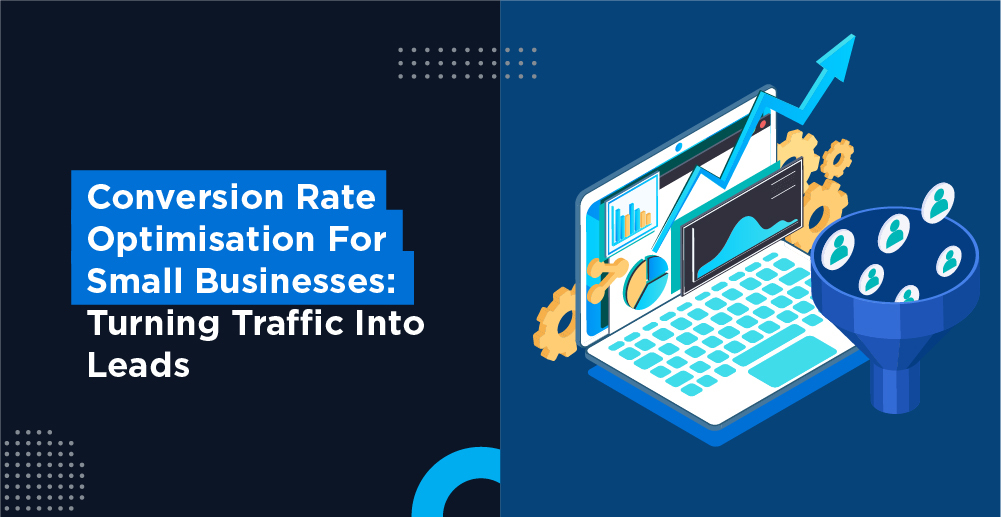
For small business owners, prioritising web traffic makes perfect sense. More website traffic should mean more leads. But for most small businesses, it doesn’t. The thing is, that’s not how it always plays out. Many find themselves in a spot where the visitor numbers look healthy but the phone stays silent. This gives rise to CRO or conversion rate optimisation.
CRO is a practical, results-driven approach to ensuring visitors turn into real enquiries. You’d be surprised how a few small improvements can significantly jump-start your lead volume without needing to touch your advertising spend.
What Is Conversion Rate Optimisation (CRO)?
CRO is the process of turning more website visitors into actual leads or customers. It focuses on encouraging specific actions like a phone call, booking, or enquiry form submission.
To illustrate, let’s say 100 people visit a site and two of them get in touch. That’s a 2% conversion rate. By improving the site performance, if that number moves to 4%, the business has doubled its leads from the same amount of traffic. This approach directly boosts your ROI by extracting more value from your existing traffic.
Why CRO Matters for Australian Small Businesses
Efficiency is the key to staying profitable and sustainable in a competitive market. If you have a low conversion rate, that means your marketing dollars are slipping through the cracks. Done right, CRO results in more leads without increasing your budget. And with a website that’s converting well, every other growth strategy becomes more effective.
How to Increase Website Conversions
Enquiries can increase when a website focuses on three things: clarity, trust, and ease of action. These elements work together to guide a visitor from being a stranger to a confident lead.
Clear Messaging That Matches User Intent
When someone lands on a business’ website, they should figure out within seconds what it offers and how it can help them. That’s what clear messaging is about and it should align with user intent.
Vague language causes people to leave. For example, a headline that reads ‘Excellence in Every Project’ is too general to grasp with one look. That changes if you add the specific solutions you offer and the service areas you cover. Focus on the outcome the customers want to achieve.
Strong Calls-to-Action That Drive Action
A call-to-action (CTA) is a clear instruction that tells a visitor what to do next. CTAs should be placed prominently on the page so they’re easy to find. Action-oriented wording helps, too. Instead of generic buttons, use “Get a Free Quote” or “Book Your Consultation.” Repeating these CTAs in the right areas on the page can help eliminate hesitation on the part of the visitor.
Trust Signals That Build Credibility
Customers rely heavily on social proof. You know it because you’re a consumer too. Reviews, testimonials, and case studies are essential for building trust. If you show that real people in the community have had positive experiences with your product or service, you’re giving visitors the confidence to reach out.
Website Speed and Performance Optimisation
Speed is a major part of the user experience. A slow website often leads to people hitting the back button before the page even loads. Improving performance through image compression and better hosting keeps people engaged.
Mobile performance is especially vital since Australians typically browse on their phones. Fast sites aren’t just better for users; they also align with effective SEO strategies by providing a better overall experience.
Creating High-Converting Forms and Lead Capture
Forms are a critical point where a visitor either becomes a lead or gives up. It’s best to keep your forms simple. Reducing the number of fields helps lower the friction. Make sure to explain clearly what happens after they click ‘Submit.’ With a streamlined form, you can expect more enquiries and ensure a better experience for potential customers.
Local Relevance and Personalisation Strategies
Local context is powerful for Australian service businesses. Use suburb-specific messaging and testimonials from locals to build a sense of familiarity. By doing so, you’re making visitors feel that you truly understand the area, and that alone can build trust.
Local focus shapes local SEO and helps turn generic traffic into high-quality local leads. If someone needs a pest control specialist, they’ll gravitate towards a business that understands local building codes, soil types, and common pests in the area.
Designing Landing Pages That Convert
Conversion-focused landing pages are built for specific results. They follow a clear structure:
- Identify a problem.
- Offer a solution.
- Provide proof.
- End with a CTA.
Remove all distractions to keep the focus entirely on what you offer. This leads to better performance for both organic search and paid campaigns.
Retargeting Strategies to Recover Lost Leads
Most people don’t reach out on their first visit. You can use ads that target people who visited your website but didn’t convert. Retargeting uses cookies or pixels to track these users, showing your ads on platforms like Google or Facebook. This way, your business stays top-of-mind until the visitor takes action.
Continuous Testing and Optimisation
CRO is an ongoing process, and that’s how you should view it. Testing different headlines or button placements, for example, allows for data-driven decisions that improve results over time. Small, logical changes can lead to scalable growth and a website that stays ahead of the competition.
How to Build a CRO System That Works
A successful system involves a simple cycle: attract the right people, engage them with clarity, convert them through ease of use, and optimise the results. This should be a core part of any digital strategy. Whether working across different industries or focusing on a single service, a structured approach makes way for consistent growth.
Conversion Rate Optimisation: Turning Traffic Into Revenue
When you realise that real growth comes from building a website with performance in mind (not just traffic), you’re already a step closer to driving more enquiries. That’s what conversion rate optimisation is about.
At Design Point Digital, we can help find hidden gaps in your lead generation and help build a CRO strategy that delivers. When you’re ready, please reach out so we can work together.
