


 Web Design
 Web Development
 UX/UI Design
 eCommerce Websites
 WordPress Web Design
 WooCommerce Web Design
 Shopify Web Design
 eCommerce Integrations
 Landing Page Design
 Corporate Web Design
 Website Redesign Services
 Responsive Web Design
 Website Maintenance
 SEO Services
 AI SEO
 Local SEO
 Content Marketing
 Digital PR
 Technical SEO
 Small Business SEO
 Google Adwords
 Google Remarketing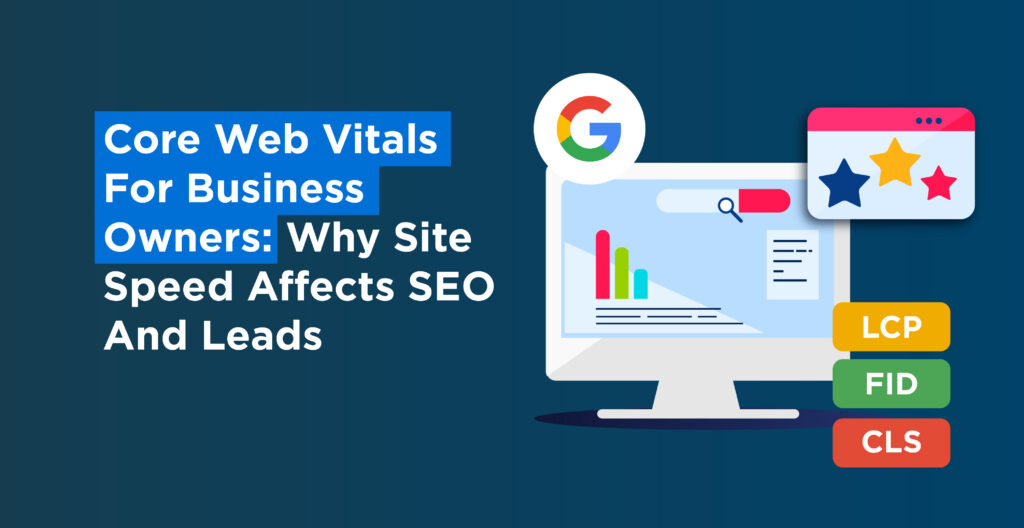
Many businesses invest heavily in SEO and Google Ads, but often overlook one of the biggest factors affecting their results is website performance.
A slow website can drain leads. People click through, wait a few seconds, get impatient, then leave. If your site feels slow or clunky, it’s highly likely that potential customers will leave quickly, even if you have strong ads or SEO.
Here’s where Core Web Vitals can help. Google rewards websites that are fast, smooth, and easy to use. Better performance can improve rankings, keep visitors engaged, and help turn more traffic into enquiries.
What Are Core Web Vitals?
Core Web Vitals are Google’s way of measuring real user experience on a website. They impact how a site shows up in search results.
3 Main Areas of Focus
- Loading speed
- Responsiveness
- Visual stability
3 Core Web Vitals Metrics
- Largest Contentful Paint (LCP) – measures how quickly the main content loads
- Interaction to Next Paint (INP) – measures responsiveness when users click or tap
- Cumulative Layout Shift (CLS) – measures whether page elements move around unexpectedly
Why Core Web Vitals Matter for SEO
Core Web Vitals are part of Google’s ranking signals. That means performance can influence where a website appears in search results.
Content and keywords still matter, of course. But Google also pays attention to how users experience a site. If two businesses offer similar content, the faster and smoother one often has the edge. For businesses competing in crowded industries, that performance advantage can lead to stronger visibility, more clicks, and more opportunities to generate leads.
How Site Speed Impacts Leads and Conversions
Speed has a direct effect on enquiries. Slow-loading service pages, booking forms, or quote pages can frustrate users at the worst possible moment. Someone looking for an emergency electrician or trying to book a clinic appointment usually wants quick answers. If they’re met with spinning loading icons, they might get impatient and move to a competitor.
Fast websites help users stay engaged and move through the page naturally. That often leads to:
- Lower bounce rates
- More form submissions
- Higher call volumes
- Better conversion rates
Improved performance helps businesses get more value from traffic they already have. More conversions without increasing ad spend is a pretty good trade-off.
How Core Web Vitals Affect User Experience
Core Web Vitals are closely tied to user experience because they reflect how real people interact with a website. If your website loads slowly, this might make your brand feel less professional. Furthermore, laggy buttons can make forms frustrating to use while shifting layouts can lead users to click the wrong thing entirely.
At a glance, they might seem like small issues, but they shape how visitors feel about your business within seconds. Ultimately, smooth experiences build user confidence.
Why Mobile Performance Matters
Most website traffic now comes from mobile devices, making mobile performance a critical part of Core Web Vitals. A website that loads quickly on desktop may still struggle on mobile if images, scripts, or page elements aren’t properly optimised.
Google’s Core Web Vitals assessments are based on real-world user experiences, with mobile performance often having the biggest impact on overall scores. If your website is difficult to use on a phone, visitors are more likely to leave before taking action on your website, which can affect both rankings and conversions.
For businesses investing in SEO, improving mobile speed and usability is often one of the quickest ways to improve the user experience and maximise the value of existing website traffic.
How to Check Your Core Web Vitals
Google provides free tools that make performance checks fairly simple. You can look into Google PageSpeed Insights and Google Search Console. These tools show performance scores, Core Web Vitals metrics, and suggestions for improvement while highlighting whether issues are happening on desktop, mobile, or both.
It’s important to check performance regularly. Websites change over time. Those new plugins or the features you recently added? You might be surprised how much they can affect speed.
PageSpeed Insights provides a detailed breakdown of your website’s performance along with recommendations for improvement, while Google Search Console highlights Core Web Vitals issues affecting real users across your site.
Common Website Performance Issues
A lot of small business websites run into the same performance problems. Common examples include:
- Oversized images
- Slow hosting
- Too many plugins
- Heavy page builders
- Unoptimised code
WordPress sites can be especially vulnerable when too many add-ons pile up over time. It starts with one plugin, then another. Suddenly, the website moves like peak-hour traffic on the Monash Freeway. But don’t worry, because performance issues are very much fixable.
How to Improve Google Core Web Vitals
Improving Core Web Vitals doesn’t always require a full website rebuild. Here are some high-impact fixes you can implement:
- Compressing images
- Removing unnecessary plugins
- Upgrading hosting
- Reducing large scripts
- Improving mobile responsiveness
Core Web Vitals Benchmarks and Targets
When it comes to benchmarks and targets, the goal isn’t really perfection. Rather, it’s creating a fast, stable experience that feels smooth for users. Google’s recommended targets are:
- LCP under 2.5 seconds
- INP under 200 milliseconds
- CLS under 0.1
SEO and Conversion Benefits of Faster Websites
Faster websites support both SEO and lead generation. Performance improvements like the following can help:
- Increase organic visibility.
- Reduce bounce rates.
- Improve engagement.
- Increase conversions.
- Improve ROI from Google Ads.
If you already invest in marketing, site speed can have a noticeable effect on results without increasing traffic costs. This is especially true if you partner with experienced digital marketing teams.
Common Mistakes That Hurt Site Speed
Several common decisions can slow websites down. They might seem minor individually, but together, they can noticeably affect performance and user experience. These include:
- Ignoring mobile performance
- Uploading massive images
- Using low-quality hosting
- Installing too many plugins
- Adding unnecessary animations
What Does a High-Performing Website Look Like?
A high-performing website feels smooth from the first click. Pages load quickly, buttons respond instantly, and layouts stay stable while browsing. Moreover, calls-to-action are easy to spot and forms are simple to complete.
If your website performs well, it supports the entire customer journey. Visitors stay focused on your services and don’t get distracted by technical frustrations.
Core Web Vitals: Site Speed Optimisation for Business Growth
Core Web Vitals directly influence SEO performance, user experience, and lead generation. When you optimise site speed, your business can get more value from existing traffic, improve conversions, and look forward to long-term growth.
At Design Point Digital, we build websites with performance, SEO, and conversions in mind. If improving site speed and user experience is your priority, it’s worth having a chat about how a more strategic approach can support stronger rankings and more enquiries over time.
