


 Web Design
 Web Development
 UX/UI Design
 eCommerce Websites
 WordPress Web Design
 WooCommerce Web Design
 Shopify Web Design
 eCommerce Integrations
 Landing Page Design
 Corporate Web Design
 Website Redesign Services
 Responsive Web Design
 Website Maintenance
 SEO Services
 AI SEO
 Local SEO
 Content Marketing
 Digital PR
 Technical SEO
 Small Business SEO
 Google Adwords
 Google Remarketing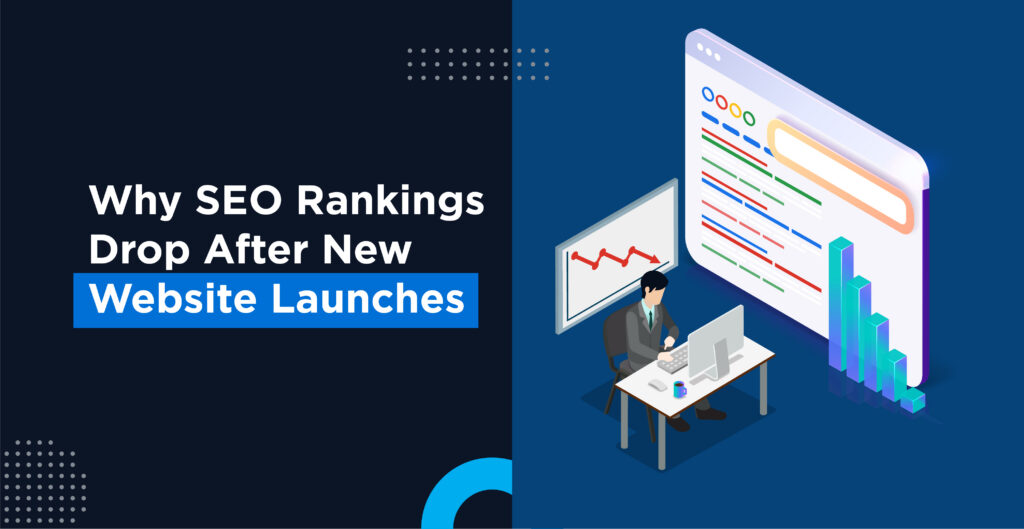
A new website should improve your online presence, but many Australian businesses experience unexpected drops in SEO rankings and traffic shortly after launch. While some fluctuation is normal, significant declines often indicate underlying SEO issues introduced during the website redesign or migration process.
In most cases, it comes down to changes made during the rebuild that affect how search engines understand, crawl, and rank the site. Google then needs time to re-crawl, re-index, and reassess how the updated version fits into search results.
What Changes Behind the Scenes That Affect Rankings
From Google’s perspective, many of the signals (see list below) it previously used to rank the site may have changed, even if the business itself has not. If the drop continues, it usually signals that something crucial has been altered:
- URLs and page structure
- Internal linking paths
- Page content and headings
- Metadata and titles
- Site speed and code structure
- Canonical tags and indexing signals
Normal Fluctuations vs Real SEO Damage
It’s important to distinguish normal adjustment and actual SEO damage. Short-term movement can happen when page templates, navigation, or URLs change. Once search engines process redirects and understand the new structure, rankings start to stabilise. However, there are clear warning signs that shouldn’t be ignored.
Short-Term Reindexing Movement
As Google crawls during the first few days after launch, rankings can move up and down. If key pages are still accessible and content intent hasn’t changed significantly, the movement often settles naturally.
Steady monitoring is the best approach. Using a combination of tools like Google Search Console, rankings tracking, and traffic trends will give a clearer picture than any single metric.
Warning Signs of a Deeper Problem
If the issues directly affect visibility and revenue, the fluctuation is likely beyond normal. This is especially true for service-based businesses that rely on organic search. Issues include:
- Important pages no longer appear in search results
- Sharp drop in indexed pages
- Sudden spike in 404 errors
- Service pages replaced by irrelevant URLs
- Missing or changed titles and headings
- Pages blocked from indexing unintentionally
- Noticeably fewer enquiries or leads
Redirects Are Often the First Problem
When URLs change during a rebuild, old pages need to be properly redirected to their closest new equivalents. This is done using 301 redirects, which signal to Google that a page has permanently moved.
If the step is handled poorly, search engines and users can end up in the wrong place or nowhere at all. For example, an old service URL might map to a new one like this:
| Old URL | New URL |
| /seo-services-melbourne | /search-engine-optimisation-melbourne |
Without a proper redirect, Google treats these URLs as completely separate pages. Any authority built over time might be lost.
Every Valuable Old URL Needs a New Home
Redirect planning should happen before launch. URLs should be mapped carefully to the most relevant new page. The goal is to preserve the connection between the old URL and the closest matching destination, helping both users and search engines find the information they expect. High-priority URLs include:
- Pages that already rank well
- Pages with backlinks from other websites
- Core service pages
- Location landing pages
- Blog posts that generate organic traffic
Existing Backlinks May No Longer Pass Value
Backlinks remain one of Google’s strongest ranking signals. During a website migration or redesign, valuable authority can be lost if websites are linking to URLs that no longer exist or aren’t redirected correctly.
Before launch, it’s important to identify pages with existing backlinks and ensure they redirect to the most relevant new destination. This helps preserve authority, maintain rankings, and minimise visibility losses after launch.
Tools such as Google Search Console, Ahrefs, or Semrush can help identify which pages have the strongest backlink profiles and should be prioritised during the redirect planning process.
Avoid Broad Homepage Redirects
A common shortcut is redirecting everything to the homepage. While this prevents broken pages, it creates a relevance problem.
Google and users are looking for specific information. Sending them to a general homepage removes context and weakens relevance. Over time, this can reduce rankings because the destination no longer matches the original search intent. Keep in mind that relevance always matters more than convenience in SEO.
Content and Metadata Can Get Lost During a Website Redesign
During a website redesign, content often gets simplified. Pages may look cleaner, but important SEO signals are often lost in the process. This includes:
- Shortened service descriptions
- Removed FAQs
- Reduced internal linking
- Missing supporting content
- Overwritten metadata
While cleaner design improves readability, search performance still depends on whether the page continues to answer the same search intent. When depth disappears, rankings often follow.
Service Pages Need to Keep Their Search Intent
High-performing service pages shouldn’t be stripped back to the point where they no longer match search intent. The strongest pages usually include elements that help search engines understand the page and help users decide. These include:
- Clear service explanations
- Local relevance
- Supporting proof or examples
- FAQs that reflect real customer questions
- Strong calls to action
Titles and Meta Descriptions Still Matter
New website builds sometimes overwrite or duplicate metadata through templates. While titles and meta descriptions aren’t the only ranking factor, they still matter. They help search engines interpret pages and influence whether users click through from results. A small drop in click-through rates can compound ranking issues over time.
Technical SEO Issues Can Block Recovery
Sometimes rankings drop simply because search engines can no longer properly crawl or index the site. Common technical SEO issues include:
- Incorrect noindex tags
- Robots.txt blocking important sections
- Incorrect canonical tags
- Broken XML sitemaps
- Missing schema markup
- Crawl errors in Search Console
- Slow-loading templates
- Mobile usability issues
Check Indexation and Crawlability First
A quick check in Google Search Console can reveal a lot. Answers to these questions can help identify whether the issue is technical or content-related:
- Are key pages indexed?
- Are there crawl errors?
- Is the sitemap submitted correctly?
- Are important URLs discoverable?
Site Speed and Mobile Experience Still Count
New websites often introduce heavier design elements, larger images, and more scripts. If this slows down pages or makes mobile navigation harder, both rankings and conversions can suffer. Google continues to prioritise usability because it reflects real user experience. This shows that website performance directly affects enquiries and sales.
Internal Links and Site Structure May Have Changed
Internal linking helps search engines understand which pages matter most. During a redesign, navigation and structure often change. Some service or location pages may become harder to reach, which reduces their visibility in search.
If fewer internal links point to a page, it can lose authority over time. This is why internal linking should be treated as part of the visibility strategy, not just website organisation.
Analytics Can Make the Drop Look Better or Worse Than It Is
After launch, tracking issues are surprisingly common. If GA4, Search Console, or conversion tracking isn’t set up correctly, data may show misleading drops or incomplete information. Before reacting to performance changes, it’s important to confirm that:
- Analytics is tracking properly
- Forms are firing correctly
- Conversions are recorded
- Search Console is verified
How to Diagnose a Ranking Drop After Launch
To identify the specific cause, you need a structured approach. Remember that you aren’t performing a random fix. Start with:
- Launch date comparison
- Pre and post-launch URL mapping
- Indexed pages report
- Search Console performance data
- Redirect coverage
- Content changes on key pages
- Internal linking changes
- Site speed differences
- Conversion tracking accuracy
Compare Before and After Data
Old sitemaps, ranking reports, and landing page data are especially useful when diagnosing changes. Pages that performed strongly before launch should be treated as priority recovery targets.
Prioritise Pages That Generate Leads
Not all ranking drops carry the same impact. A lost blog keyword may have minimal commercial effect. A dropped service page can directly affect enquiries. The focus should always be on pages tied directly to revenue.
How to Prevent Ranking Loss Before Launch
The best outcomes happen when SEO is included from the start of a redesign. Prevention is almost always faster and more cost-effective than recovery. Pre-launch planning should include:
- URL mapping and redirects
- Content preservation strategy
- Metadata migration
- Staging site crawl testing
- Internal link structure planning
- Sitemap setup
- Tracking configuration
Build SEO Into the Website Redesign Plan
SEO should sit alongside design and development decisions from day one. A website should not only look better; it should also protect and improve existing search performance while supporting future growth.
Run a Post-Launch SEO Check Immediately
Early detection limits long-term damage. Once a site goes live, check the following:
- Redirect validation
- Indexation checks
- Sitemap submission
- Page speed review
- Metadata review
- Key ranking monitoring
Protect Your Rankings With Design Point Digital
SEO rankings can drop after a new website launch when key elements like redirects, content, metadata, crawlability, internal links, performance, or tracking are disrupted. The good news is that they’re preventable and recoverable with the right structure in place.
If your rankings have dropped after a website launch, identifying the cause early can significantly reduce recovery time and protect lead generation. Design Point Digital combines website development and SEO expertise to help businesses launch new websites without sacrificing search visibility.
